

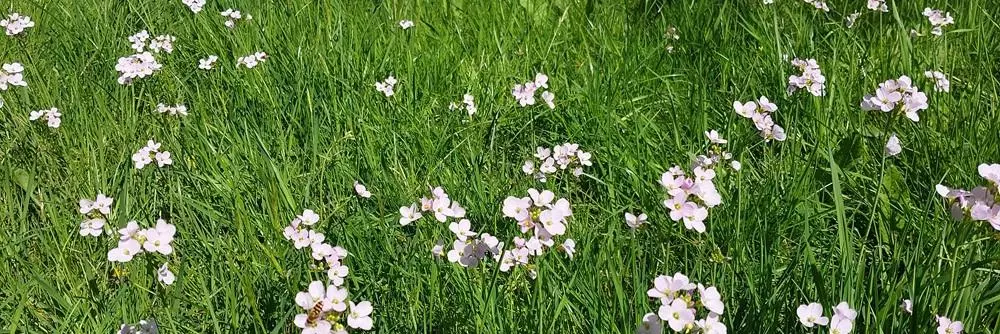
Testing soil health across regenerative and conventional farming practices
Regenerative farming practices are increasingly promoted as a means of restoring soils degraded by conventional farming practices. However, there are currently no standardised, scalable metrics for assessing improvements in soil health, with most existing measures being costly and narrow in focus. Volatile organic compounds (VOCs) emitted by soil microbes have been proposed as a potentially integrative and cost-effective indicator of soil condition. This study will investigate the feasibility of using VOCs as biomarkers of soil health associated with regenerative agricultural practices. First, VOC profiles of ‘healthy’ soils will be characterised from samples collected from farming plots that have been covered by unploughed herbal leys for the past one to four years. Second, these profiles will be compared with those from regeneratively and conventionally managed arable plots. All sites are located at FarmED (Honeydale Farm, UK). VOC analysis will be carried out using gas chromatography-mass spectrometry (GC-MS). In parallel, conventional soil health metrics, including soil organic carbon (SOC) and community composition (assessed using eDNA) will also be measured to determine the extent to which of these variables explain variation in the VOC profiles. Statistical analyses will be conducted using R. Three hypotheses will be tested. First, that soils under these different management regimes can be distinguished based on their VOC profiles alone. Second, that the VOC profiles of regeneratively managed arable soils more closely resemble those of ‘healthy’ unploughed soils compared to the VOC profile of conventionally managed arable soils. Third, that microbial diversity is the primary driver of variation in volatile profiles
Aims
The overarching aim of this study is to investigate the feasibility of using VOCs as a stand-alone metric for soil health. The study will be in two parts, based upon the 8-year crop rotation of the sample site.
Part 1 will sample from the first four years of the crop rotation, which are unploughed herbal leys. This practice is thought to improve the health of the soil. Therefore part 1 of the study will characterise the VOC profile of ‘healthy’ soil.
Part 2 will sample from the last four years of the crop rotation, which are dedicated to arable crops. Part 2 will compare the VOC profile of ‘healthy’ soil (characterised in Part 1) with the VOC profiles of both regeneratively and conventionally managed arable soils.
For each part of the study, I will also take conventional measurements of soil health, e.g. soil organic carbon (SOC), and also the soil microbial community using eDNA. I will assess which variables best predict changes in soil VOC profiles.
Three hypotheses will be tested:
- that the soils from plots covered by herbal leys, regeneratively managed arable cropland and conventionally managed arable cropland can all be distinguished based on their VOC profiles alone.
- the VOC profiles of regeneratively managed arable soils more closely resemble those of ‘healthy’ unploughed soils compared to the VOC profile of conventionally managed arable soils.
- that microbial diversity is the primary driver of this variation.
Method
The sampling site is FarmED (Honeydale farm) in the Cotswolds. This region is characterised by shallow calcareous soils overlaying Jurassic limestone. The soils are stony and free draining. The region has a temperate oceanic climate, with a yearly average temperature of 14.35 degrees Celsius and a mean annual rainfall of 822.59 mm.
FarmED is a demonstration farm with eight 0.8 ha arable plots in an 8-year crop rotation. VOC samples will be taken from all of these stages. The first part of the study will sample from the 4 plots of unploughed herbal ley, which comprises sainfoin, clover, chicory among other forbs. The second part of the study will sample from the four plots containing crops, comprising wheat, then rye, then hemp/carlin peas and finally clover stubble. When the soil is cropped, it is ploughed, thereby impacting soil microbial community and thence the VOC profile.
In addition, further samples will be taken from a 1 ha control plot of wheat, which unlike the strips in rotation is conventionally managed with pesticides, fungicides
and fertiliser.
Project details
Dates: MBiol project. Oct 2026 - Jun 2027
Research Team: